Patriot Day

As an expat New Yorker, I have to say something to commemorate this day. I no longer have family ties to the city; but I just learned that a faithful friend has taken a job with the City in emergency communications. His role is vital and he’s doing something for the City that was lacking in 2001.

September 11, 2001 attacks in New York City: V...

September 11, 2001 attacks in New York City: View of the World Trade Center and the Statue of Liberty. (Image: US National Park Service ) (Photo credit: Wikipedia)

I can still hear the firemen’s communications that day (we’ve all heard the tapes). How heroic they all were. Because of those firemen’s efforts, relatively few people perished in the Tower collapses. However, as with all the crises ongoing around the world today, a few is too many.

Will we let this tragedy fade into our collective memory of wars past (and this was war)? I’m afraid the answer is yes. Our country is too good at letting its memories fade. Distracted by the latest gadget or game, movie or spectacle, we neglect the important things.

What important things do we neglect? Things like judging each other by the content of our characters and not by the color of our skin (or any other wrong distinctions). Or is our country saying that Malcolm, Martin, and Medgar died in vain? Character takes the right stuff. Stuff we don’t seem to have any more.

We are all broken in some way. Some count just seven: lust, gluttony, greed, sloth, wrath, envy and pride. Some cite the Ten Commandments. However, God said: “…Whoever says, ‘You fool!’ will be liable to the hell of fire.”

If everything we do is suspect, then we need a Savior that is greater than we are to save us from our neglectfulness, lack of character, and brokenness. We need Him to build in us heroic character or else we perish.

Is 99 Cents the New Free?

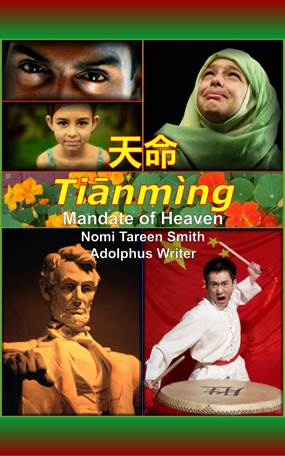
Tianming CoverI can definitely assert that using ‘free days’ in the KDP Select program to boost book sales or visibility doesn’t work after the debut offering. I’ve tried using free days prior to the July 4th and Labor Day holidays only to realize a decrease in sales rank when the sale days were over.

I have 150 free copies out there all over the world and I know three of my four book reviewers (I have a good guess on the fourth). Each of them, likely, paid full freight.

I’ve tried other things to boost sales, too. I’ve put out a press release. Don’t be fooled by so-called ‘impressions’; only sales count. I did an author interview. It was very nicely presented but the site draws a limited audience. I have a Goodreads page. This site rejected me as an author for some reason.

I contacted Amazon Vine and Top reviewers in my book’s genre (spying & intrigue). Of the eight I contacted, one put me on his to read pile. He has a policy of not slamming books he doesn’t like; I greatly appreciate that attitude.

However, whining gets you nowhere.

I’ve got a second book in the works and I’m trying even harder than at first. Better writing. Better editing. Better marketing. Pricing based on page count. I’m sticking with KDP Select when it makes sense (70% royalty and the Lending Library program). And I’ll try to release a third book this year.

I’m going to have Red City review the first book, Tiānmìng – Mandate of Heaven, to find out what they think about it. We’ll have to see. There’ll be no welfare payments for this author.

Author Interview – Adolphus Writer

My author interview with Jade Kerrion went live this morning. Here is the raw material we submitted. We thank Jade for the opportunity.

Author: Adolphus Writer

Book Title: Tiānmìng – Mandate of Heaven

Adolphus Writer PictureShort author bio: Adolphus travelled to Europe, the Middle East, and Far East after graduate school. Arriving back in the USA, he took a job in a large defense firm applying his creative and analytical skills to pressing problems. In early 2012, he established Mandated Memoranda Publishing, LLC, as a way to support the lifestyle to which he had become accustomed. He says he likes to eat on a daily basis and stay debt–free.

Contact information:

Purchase link: http://www.amazon.com/dp/B00D9XB9ZA

Website / Blog: https://mandatedmemoranda.com/

Goodreads: http://www.goodreads.com/Adolphus_Writer

Facebook: https://www.facebook.com/pages/Adolphus-Writer/126199467485854

Twitter: https://twitter.com/AdolphusWriter

Tianming CoverBook Synopsis: Tiānmìng – Mandate of Heaven is an everyman’s spy adventure. It is a reluctant journalist’s tale of economic calamity, geologic catastrophe, geopolitical power shifts, and the beginnings of a hands–on surveillance state. The protagonist, Michael Babbage, grows through his ordeals and comes out a more experienced, if not wiser, person. He’s supported by Buck Jefferies, his recruiter, and a mysterious organization Michael only knows as CWNS.

Desired posting date: Friday, August 30, 2013 to coincide with a free book giveaway on Amazon.

ABOUT YOUR BOOK AND WRITING PROCESS

1.       Tell us a little about your book.

The primary author, Nomi T. Smith, could not be with us today. Her initial manuscript had a slightly different slant on the story. We chose to reorient the plot around Michael Babbage to gain wider acceptance for an everyman’s spy adventure. The book is not part of a series and it has political, techno–thriller, and science fiction elements to it.

 2.       How did you come up with the title?

While we were forming Mandated Memoranda Publishing, LLC, Nomi approached us with her novella. We were steeped in the idea of the Mandate of Heaven because of the research we did to name the company. We used the Chinese translation, Tiānmìng, to give the book international appeal. In a nutshell, the title fit the novella’s theme and guided the reorientation.

 3.       How much of the book is realistic?

Too much, I’m afraid. The book was published June 8th, three days after the first NSA disclosure. The naval battle scenes are more dramatic than those actually occurring at–sea but the technologies we were able to discuss are accurate. Finally, scientists are making remarkable progress toward the biological–machine interfaces described in the book. I hope the rest of the story remains fiction forever.

 4.       What’s your favorite part of the writing process?

I can’t speak for Nomi, but I enjoy the research that goes in to a work of fiction. For Tiānmìng – Mandate of Heaven, we have over two gigabytes of corroborating materials covering: political, technological, editorial, and predictive analyses.

 5.       If you had to do it all over again, would you change anything in your book?

One of our readers strongly suggested we should not have changed the focus of the story from Nomi to Michael. However, some of Nomi’s original plot line will be published as short stories in Tragic Wonders, Stories and Essays to Ponder.

 6.       Do you belong to a critique group? Have they helped improve your writing?

I have to thank my advance copy readers, they know who they are. Story simplification and elaboration simply wouldn’t happen without them. They drive the “show versus tell” process, even in works not due for publication until 2014. As a policy, we recruit trusted readers for every publication.

 7.       Did you hire an editor to review your manuscript before publishing?

Absolutely, she gave us guidance though every step of the development process. Her mentoring was invaluable. She had prior experience as a magazine editor and as a published author. Mandated Memoranda Publishing will not issue a book without employing professional editing.

ABOUT PUBLISHING AND MARKETING

 8.       What factors influenced your decision to self-publish to Amazon?

We self–published Tiānmìng – Mandate of Heaven exclusively as a Kindle Edition to keep overhead costs low, maximize our exposure worldwide, and keep control over our property. Additionally, we are participating in the Kindle Direct Publishing Select program to maximize profits. However, we hope to keep prices low for our readers of this and future publications. Some books cost too much money; money we just don’t have any more.

GENERAL QUESTIONS

 9.       Do you recall how your interest in writing originated?

I can remember standing up in class, at age seven, and declaring I wanted to write a book about nuclear energy. I read widely in fiction and non-fiction throughout my schooling and afterwards. I had always planned on writing and publishing after retirement. The economic downturn merely accelerated the schedule.

10.   Tell us your latest news.

Mandated Memoranda Publishing, LLC plans to release a second Kindle Edition called Tragic Wonders, Stories and Essays to Ponder, an anthology delving into our souls’ deepest fears and needs. Expect it on shelves by the fall, 2013. Book three is a retelling of a beloved story for our times. We call it A Digital Carol, due Christmas, 2013. Book four is Who Shall Be God, a fictional account of the struggles between two families, the Stadists and the Libertas, who live in a Midwestern city, north and south of 38th street, respectively. It is due in 2014.

Inflammation – Tomarick Fescidia

We Can Do It poster for Westinghouse, closely ...We used to be people who fulfilled our needs before our wants. We valued those things necessary for life. We saved for things we’d like to have if we were able. Sometimes we provided for needs to the exclusion of our wants so we’d have enough to share with others. Now we can’t wait to put on credit the newest electronics we saw unboxed online. We hold down multiple jobs to “sacrifice” for what we think we want. All the while, our families, relationships, and community fall by the wayside.

We used to live in places that had stories to tell. We valued the historical diversity of our nation. Now we all go down for our morning pick–me–up to the local franchise, offering the same experience in every city and town across the nation. We shop when we’re anxious, burn with passion for the latest trends, and forsake human companionship for electronic simulations of various forms and intensities.

When did we give up our culture? How did we become a consumer society? Why have we given ourselves over to our invisible overlords? To those who, however ineffectively, pull the strings which control our collective thoughts and actions. To them, it turns out, we, the American public, had a problem in need of a solution. What was our problem? Instability.

The solution was the active use of propaganda to direct the American collective unconscious towards social stability. You may remember, propaganda is the use of psychological manipulation or coercion to influence opinions and actions of individuals and groups toward stated or unstated goals. This was their chosen method to engineer the “consent of the governed.” Not the means that our founders intended when they penned those words, I’m afraid.

Propaganda in the twentieth century proved effective to promote democracy during World War I and the Final Solution during World War II. The same techniques were effective in regimenting and controlling the American public. Plans were instituted without many of us being aware of their influence. And there was money to be made for those who caught on. Lots of money.

Consent engineers, also known as public relations specialists, maintained that we Americans inherently distorted any information we took in. We made up our minds before we gathered and analyzed the relevant facts. We operated with partial facts corrupted by our preconceived prejudices and were unable to reach sound conclusions. Because of this situation, we were deemed incompetent to direct the public affairs of our democracy. An elite would rule the nation.

The specialists envisioned a utopia where individuals’ otherwise unconscious instinctual biological urges were controlled and directed by the elite to the service of some purposeful goal. Over the centuries, some societies built pyramids, some constructed hanging gardens, and many tried to rule the world. In our nation’s case, the goal was economic prosperity. The elites, which the specialists served, happened to own the means of mass production and directed the irrational desires of citizens to consume their wares. This had the simultaneous effect of satisfying the biological forces that might tear society apart.

By directing our own desires, the elites built a stable society. Citizens could work off their frustrations by spending on self-gratifying goods and services. These goods and services represented a common identity to which citizens were to adapt their self-images. Each citizen would acquire from what they consumed a sense of self, purpose, and history reflecting current attitudes and social patterns. The society and environment at large would also take on this immediacy and impermanence. No longer would we inherit our self–images or environs from previous generations.

Conscious and intelligent control was deemed important for democracy. Those who performed this duty were the real rulers who directed of the country. They used media tools to manipulate an unsuspecting public. The press release informed readers of the ‘news’ about events, products, or attitudes to adopt. Leaders were used, with or without their agreement, to sway those who followed them. Polling, focus groups, or other “democratic” means were employed to shape opinion rather than just measure it. Events, or better, spectacles, were created that purported to inform or celebrate when what was intended was to influence acceptance of new concepts and perceptions by the unconscious minds of many.

But weren’t they really tapping into humans’ ancient underlying motives. The scriptures say that the fear of death brings lifelong slavery. It was really this fear into which modern propaganda taps. Do I need to explain the concept of “duck and cover?”

They thought scientific manipulation of public opinion was necessary to overcome chaos and conflict in society. However, they knew that public relations propaganda could be used to subvert democracy as easily as it could be used to resolve conflict. It is in use to this day and we find ourselves at a crossroads.

None of this is new. It has been happening for millennia. All I did was gather the information in one place for you to read. I urge you to decouple from the hype, search your conscience and a Bible, if you’ve got one, and make changes starting with yourself first. Skip the hearty breakfast and don’t go shopping! Instead, find a church to participate in that reveres Christ, our only savior from our bodies of death. And let the love of Christ rule your reason and passions. Maybe we can still recover the life and community we’ve surely lost, before it’s too late.

Every Good Story – Thysdor Ya’Rosel

Dorothy L. Sayers offered a very interesting hypothesis in an essay she wrote long ago. It goes something like this.

Description: Front side (obverse) of one of th...

Nobel Prize Medal (Wikipedia)

Every story has a beginning, middle, and end. If the author is a good one then the story fits within a self-consistent world. Each character and setting has a backstory that supports the plot. Characters are born, are shaped by childhood experiences, become educated or not, and venture out into the world where we meet them. The settings that the characters inhabit have histories and origins. Someone had to dig the foundations, build the walls and pave the roads. These beginnings are often untold but are clearly important and materially affect the story.

Although also untold, the characters have futures. Some could rise to great heights while others come to ignoble ends. The settings might tumble to ruin or rise to new grandeur. They might be swept up by titanic forces of destruction or innovation or remain just as the author portrayed them in the story. Ultimately, the backstory influences and carries the story as if it already happened or will happen in the future.

A good author desires that we enter into and identify with the story and characters. The author starts their story as late as possible in the action to enhance the story’s drama. They prevent unnecessary author intrusion by introducing materials through view-point characters. They craft clear transitions from scene to scene and chapter to chapter to enhance the story’s momentum. All these techniques aid our understanding and appreciation of the author’s story.

Classical analysis suggests the story must follow a narrative arc where the main character, or protagonist, comes to understand their goal and the penalty for not attaining it. The protagonist then struggles to attain the goal while overcoming obstacles. He or she makes a key decision or performs a heroic act to ultimately realize the goal or fail tragically, sometimes in opposition to a key adversary. Next, the protagonist uses the results of the decision or act to progress toward the goal while contending against adversaries or unfavorable circumstances. Finally, the protagonist confronts the adversary and either wins or loses bringing about resulting consequences.

***

With this background, what if a perfect Author existed with a completely consistent imagination? An Author, unlike human ones of limited capability, who was able to bring forth Their story with substance and overwhelming power. Suppose They decided to create an immense and ancient universe with a comprehensive history. Within that universe, they formed our Earth. And in, on and around it, They placed all that we have or will ever find: minerals, gems, fossils, fuels, animals, water, air and such. And They did all this so that everything created pointed to the Author’s eternal power and divine nature. No mere cosmos written on paper but in reality.

What if They decided to skip ahead for drama’s sake and populated the Earth with us — actually, just with our original parents — and gave them one rule to obey in a garden they would tend. Suppose They provided our parents with an adversary who hated their very existence and wanted them to disobey that rule?

Having planned the outcome, the Author provided means for our parents to be restored once they failed, yet outside their former relationship – separated from the Author – experiencing death even while they lived. Why would the Author have done all this to have it end in tragedy? Perhaps the Author had a greater plan in mind.

Our first parents offspring did amazing things, some good and some desperately evil. The adversary ruled through death and each generation died one by one when their time was up. After a cataclysmic flood wiped the Earth clean, eight souls repopulated it. Later, one man, although past his prime and as good as dead, believed the Author’s word that in his offspring all the nations of the earth would be blessed.

Later still, the Author established a people from that one man to represent Themselves to the world. These people received laws and ordinances which set them apart from all other nations. Failure to obey these laws meant certain death. The people failed to see that the laws were impossible to keep apart from the kind of trust in the Author that their ancestor had shown. They rejected call after call from the Author’s representatives to trust and obey the Author.

After the Author’s people rejected all the representatives who had come before, the Author sent the Son in the world as one of them. The Author always planned on entering directly into the story when the time was right. The Son perfectly obeyed the laws given to Their people and thereby deserved life and not death. However, the Son took the evil of those who were His upon Himself in a death perpetrated by that hateful adversary from the garden long ago.

Having overcome death through an indestructible life, the Author created a new people. At first, They drew from the original people. But soon, They called out new ones throughout the world. All of these followed the Author through the Author’s written words and the Author’s Spirit. The adversary, knowing his time was limited, raised up opposition to the new people and sought to lead them astray. Perhaps the adversary could still win?

However, the Author has given Their people aid against their adversaries. And They enter once more at the end of this story to rescue Their people, mete out justice to the opposition and vanquish the adversary. Finally, the Author promises sequels filled with peace and rest for those who trusted and obeyed and filled with never-ending torment to those who opposed.

***

The scientific among us would declare this position is unfalsifiable. Some call it the ‘Last Thursday’ hypothesis as if that terminology were derisive. However, one of their own declared a theory is only unfalsifiable to those without the imagination to figure out how to do so. I would claim you are undertaking the test at this very moment and its conclusion awaits only your demise. Then you will know the outcome. Then, of course, it will be too late to change your bet. The die would be cast and the case closed. No study grant or Nobel Prize for you.

***

Maybe, on the other hand, you realize that you are part of the Author’s story. It is happening all around and in you this very moment. Now that you know the Author’s ending, what will you decide to do? Every good story has a beginning, middle, and end. How will yours end?

Nothing to See Here – Pearl Thanes

I conspired once with my son to cover-up an incident. I broke a treasured ship-in-a-bottle that my husband constructed as a gift to me for our fifteenth wedding anniversary. We blamed it on the dog, for years. My husband never much liked the dog after that. Poor dog died without knowing why he was on the outs. Sorry, hon, I should have told you; it was a good dog.

English: President of the United States Richar...

Nixon was purported to have said that without Martha Mitchell there wouldn’t even have been a Watergate scandal. Almost foolish in its goals: securing information from the Democratic National Committee in the effort to reelect the president; these events brought Nixon down. Conspiracy turned to cover-up and scandal. If no one spoke up, it would be a conspiracy today.

Many things go on every day in the world. Most of it results in nothing. Some leads to tragedy or triumph. These consequential events cause a few to wonder what lies behind the veil. Is there a secret cabal ruling the world, did someone stand to gain, or was it all planned to the last detail?

Why do we ascribe bad motives and devious planning to others? Well, first, we don’t know what they intended and we hate not knowing. And second, we know what we might do in their place and it is usually not good. We violate the golden rule in thought and deed.

Professor Emeritus M. Barkun says conspiracies can be grouped as: event, systemic, or super conspiracy. A mysterious assassination is an example of an event conspiracy. Infiltration of a group with broad goals into an organization is a systemic conspiracy. And multiple event and  systemic conspiracies linked in complex, hierarchical ways extending over time and distance is a super conspiracy.

Job, an Old Testament poet, was subjected to a conspiracy of sorts. God sought to prove Job’s goodness to the adversary, Satan. God allowed the adversary to destroy all but Job’s life and his wife. We witness the transactions in heaven, but Job doesn’t.

To him, his entire calamity seems without justice. If only he could argue his case. If only a mediator would step in between God and man to reconcile them. He knows his redeemer lives and that he will see Him in the flesh after his death. And Job displays this confidence without having beheld God at any time.

After God reveals Himself in the whirlwind, Job retracts his charge of God’s injustice and repents in dust and ashes. God thereby proves His claim about Job to the adversary through Job’s faithful obedience and repentance from sin.

It is never clear if Job finds out why he was tested. To him, it was a trial for endurance. And, yet, we are told that unseen powers and principalities were contending for his downfall and their supremacy over him and God.

Job’s trial presages another trial that happened at a more opportune time, the very fullness of time. Many kingdoms rose and fell through conspiracy and intrigue in the intervening period. These came to bitter ends; unremembered, except through equivocal stone monuments to greatness and squalor. All that is now hidden will be revealed at the Judgment throne. Dead men will tell tales. At that time, will you be like Job or his adversary?

People Are Human – Richard Grinnell

People are human, a fact which we may forget in the course of doing our jobs. Obviously, we expect the person with antisocial personality disorder to forget this fact in the course of doing her job. But this omission is also perpetrated every day by many knowledge workers, service providers, and even manufacturing laborers. People are not to be fixed (or destroyed), plied, maligned, underestimated, or any of a myriad of things. They are to be given dignity and sought after by digging (figuratively) beneath the surface. Dale Carnegie advocated this very position.

We dig below the surface to find out who they are, what they want, and how we can help them get it. Sounds like a marketing ploy, doesn’t it. Well, it doesn’t have to be. Asking caring, discerning questions of someone shows we care about them. Following up at a later date shows we value them as a person. Helping them meet deep-seated needs shows them they are meaningful participants in our community. Our ends come too quickly to neglect this obligation. For many in the US, we live an average of only 28,600 days plus or minus 950 days from start to finish. We try and fail to prolong it much beyond 43,830 days.

What happens after a rain when you dig in a garden, in your lawn or at a playground? You bring up mud and maybe things a lot worse. There are a few persons in every circumstance who are not safe with which to interact. Turn these in to the authorities, if possible. If not, flee them. There are some others who will cling to the attention giver. These must be told that they are responsible for their own wellbeing and that no one person on earth can fill their need. You must maintain boundaries for their good and your own. The majority will want to be known and will appreciate the attention and care. To the contrary of the exceptions, the majority may not reciprocate the gesture seeing no need to do so towards you.

Life is the one opportunity we have to make a positive difference both in our own lives and that of others. Are we taught to be indifferent, to objectify others, or to hold others at arm’s length even while we might provide care, service, or labor? Yes and no. We are afraid to get hurt so we say it doesn’t matter. We face so many needs in a day, perhaps life and death ones, that we disassociate the needy from their humanity so we can cope without our total emotional collapse. Perhaps we recognize the need and seek to serve it so far but no further. We definitely train ourselves in these behaviors through repeated practice.

However, and more fundamentally, we can change our behaviors and feelings of authenticity will follow. This requires us to exert our wills, knowing what must be changed in our behavior and doing it. Through practice it will ‘take’. Get up from failure and try again. This is the way we’ve been made.

You may not accept it but we were made by a righteous Maker who expects perfectly right behavior. He went so far to free us from the ties that bind us to wrong behavior that he paid the penalty for our actions. The cost to Him was the death of His Son as a substitution for our own so that we might live. His Son’s death was payment for an infinite debt each of us owes to a just God. He will attribute the merit due His Son to us if only we surrender to Him from our hearts.

Mean Ends – Luxe Hso-Dualy

Paraphrasing Aldous Huxley, let’s be clear, most of us are ignorant of certain, uncomfortable concepts because we choose not to inquire of them. In this age, when information exudes from every surface, we consciously reject it.

Like Huxley, if it suits our desires then we proclaim that the world has no meaning. Because we decide this, we strip our adversaries of reasonable ways to refute our premise. This position gives us license to do what we want without opposition. We use the levers of power we have available to make our choices rule the world.

So long as we can do whatever it is that we want in the here and now, what do we care for the consequences to others or ourselves in some supernatural eternity? We declare there is no eternity and it must be so.

We are gods and nothing will be impossible for us to do.

Have You Seen our Links Page?

No, we haven’t misplaced it; it’s right here. I’m afraid it fell into disuse while we were developing our first novel. We’re now trying to increase sales without making ourselves a nuisance to our friends. We haven’t succeeded at that yet, I’m afraid. But, we’ll keep on trying.

This web log is Mandated Memoranda Publishing’s primary vehicle to communicate with friends. You can also find Adolphus Writer on Twitter and, to a lesser extent, on Google+ and Facebook. You can contact us at:

MM @ Outlook

We’ll try to remember to update our links page more often as we prepare book two, Tragic Wonders. And, no, we haven’t forgotten the promised cover page thumbnail.

If you know of up-coming book contests and awards competitions that recognize author achievement, please drop a line.

Self–Publishing — Love It or Leave It

What a long, strange trip… Sing it with me. We here at Mandated Memoranda Publishing LLC have just given birth to: Tiānmìng – Mandate of Heaven. I had to check with Ninja to make sure I wasn’t exaggerating. We can’t provide a clear, error-proof method to do self-publishing, but we’ll tell you all we can remember (and we won’t charge a cent). Please forgive the length of the post. As I said, it was a long trip.

The following process assumes development on a Windows PC. It may work on a Mac but your mileage may vary. We read a lot of references. Most were $2.99, or less. Given their long-term control over the publishing formats, I cannot fathom folks reluctance to stick to Amazon’s preferred rules stated in their Kindle Publishing Guidelines, methods overview, one layer deeper guide, and examples (see right hand list). The publishing method we followed gives you almost total control over your book. The publishing method is “simple” assuming you are writing from a fairly well thought out story line (I use detailed graphics to develop the plot).

Develop your Cover (an important marketing tool) according to Amazon’s Publishing Guidelines (1.6 high to 1 wide ratio and greater than 1000 pixels wide). I use royalty free (one time charge for perpetual use) images from Getty Images. Getty requires attribution on your book’s copyrights page.

Type out your book in Microsoft Word. Early in the typing (first thing is best), modify Microsoft’s Normal style. Change the font to +body (Calibri, 11 point). Actually, you’ll be removing this later in the filtered HTML but the PDF for copyright submittal to the Library of Congress looks modern in this the format. As you modify the Normal style, select the paragraph attribute. In the paragraph dialog box, under ‘indentation’, set “special” to ‘first line’ and set the “by” value to 0.01” (the smallest inches value Word recognizes). Set the “spacing after” value to 6 pt. and “line spacing” to ‘single’. Find and set the “tabs” value to 0.01”, too. The 0.01″ settings influence something important called ‘text indent’ (see below). Leave the others at their default values (if you still had them at their original defaults in the first place).

Use user defined format styles based on your slightly modified Microsoft Normal style (undo what formatting you have if you have to and rebuild it based on Normal, it’s worth it). Define other styles based on the Normal style (for instance, those for Title and Subtitle, the *** symbol, page breaks, etc.). What you want is a well-controlled set of styles that you can modify globally solely by modifying the Normal style. A few styles must diverge from this approach. Use Microsoft’s Heading 1 style for chapter titles and Table of Contents (TOC) style for the table of contents.

Use the insert bookmarks dialog box in Microsoft Word to add two special bookmarks: toc and start. These are case-sensitive and define where the table of contents and beginning of your book are, respectively. I recommend that the toc bookmark go before the heading for the table of contents but after the previous page’s page break (you can adjust its placement in the filtered HTML if necessary). I strongly urge placing the start bookmark at the top of the title page.

Proof the manuscript thoroughly. Make sure to delete blank lines and spaces (you should use page breaks between chapters and the *** symbol between scenes in a chapter). Submit what you have to an editor. Pay one to tell you what your friends or family will not. A good developmental editor is worth their salt. Fold editor comments back into the primary copy. Proof again and, if possible, resubmit to the editor for a final look-see.

Then, and here’s the part we spun over for weeks, save the Microsoft Word file as filtered HTML. Make sure to apply the book’s title in the “title” box (where it says: add a title) on the “save as” dialog box before saving the file (it gets placed in the HTML and is used by Kindle devices). You’ll also use the original file to create a PDF for the Library of Congress Copyright process (you’ll imbed the Cover image in the original Word document for the PDF but not embed it for the filtered HTML). Your baseline has just diverged so make sure that you’ll make almost no changes to the text at this point. You’ll have to fold back any format changes to the PDF and master Word copies (what a pain that was).

We went back to square one several times. One of the go-rounds centered on updating the Microsoft Word TOC without first removing the old one (go to the reference tab and the TOC pull down menu for the remove TOC command). Not doing this added extraneous bookmarks (‘< a id=“_Tocnumbers” > < /a >’) in the HTML in front of headings (i.e., two sets of bookmarks, only one of which matched the TOC ‘href=#_Tocnumbers’ entries). When you open the filtered HTML, if you’ve made that mistake, you’ll see what I mean.

Open the filtered HTML file with Microsoft Notepad (or your favorite text editor that won’t add anything behind the scenes like Word does). Now remove all ‘font size=’ statements (you might leave some for Heading and Title styles but use relative sizes like 120%). Also remove all ‘font color=’ statements since the Kindle devices use their own defaults (and black font disappears on a black background selectable for Fire and PC readers). Now, your text will scale (more) properly on Paperwhite and Fire devices. The font will change on Paperwhite. And Fire and PC readers with black or sepia backgrounds will show all your text.

Change all ‘text indent=value’ to 0 from whatever Microsoft Word set them. This prevents the Kindle devices that naturally insert tabs at the beginning of paragraphs from doing so. Obviously, don’t do it if you like that formatting. I left most of the absolute margin specifications. I also left extraneous styles Microsoft added. If I were braver or surer of what I was doing, I’d have removed them (be careful, it’s easy to remove stuff you actually need).

I recommend formatting the page breaks separately with a slight bottom margin (0.01”). This prevents certain devices from ‘dangling a sentence’ when a reader lands on a chapter heading and pages back one page (I do that a lot). It does trade the aforementioned error for another. The page back command has to be performed twice to take. Not sure why that is but it only happens when you first land on a chapter heading. Such ‘path dependencies’ are likely database related, so go figure.

I also, foolishly, added language references all over the text. It helps the Microsoft Word spellchecker but is unnecessary (ever get an error that a foreign language dictionary wasn’t available, that’s why). I won’t even tell you how I did this so you won’t be tempted to try it. Hundreds of remnants are still in the filtered HTML to this day (‘< span > … < /span >’ items). However, I did neuter their effect by removing the ‘lang=en’ field.

Review your filtered HTML file in a web browser at this point. I found some extraneous HTML symbols that I failed to remove by doing this. It is much easier to check now than later in the process. I also spell checked a version (that I discarded) in Word for errors I might have introduced in the format editing process.

At this point you have a choice. You can upload your filtered HTML file to Amazon KDP for them to convert into a book. After they process your HTML, you download the files they generate and iteratively refine the HTML (I did not do this, exactly). However, do not submit your book for publication until it is finished; it will go live (more below). Or, you can construct two more files and use Amazon KDP’s Kindle generation program to build your book. You will make the same number of iterations to your book if you use the Kindlegen program, but, you may have more insight into the changes you make.

You will need two things from Amazon to continue. The ‘compiler’ or book generator: Kindlegen (I used PC version 2.8) and the test tool: Kindle Previewer (I used PC version 2.85). You can also get the latest versions here.

The two other files you’ll need are the Open Package File (or OPF) and the Navigation Control file for XML applications (or NCX) files. The OPF file defines to the Kindlegen program your books cover file, the metadata about your book, the text files, and how to find the ‘toc’ and ‘start’ bookmarks. The NCX file tells Kindlegen how to construct the pop-up table of contents folks see on their Kindle devices. It’s called a logical TOC. Amazon provides examples.

The example that stood out far above all others was the annotated Kindle Users Guide OPF (Guide.opf in the downloadable Guide example). Whoever did the annotation is our friend for life. The OPF file tells Kindlegen how to build your book (where your files are and how to process them). Populate the file (in Notepad or equivalent) and save as ‘all files’ (not the default ‘txt’ file). You will overwrite the existing OPF file, so archive it first. I had 28 different versions of the three files archived by the end of the process (no, I’m not proud of that, just really miffed).

There is a good example of an NCX file in the Guide example folder, too. With your HTML (or HTM), OPF, and NCX files you are ready to have Kindlegen build the book. Explicitly follow the instructions in the manual.html ‘read-me’ entry that comes in the folder with the Kindlegen.exe file. All this may sound like gobbledygook, but you can do it.

Just in case it hasn’t become obvious, you are, in essence, programming your book in a formatting computer language. You generate MOBI files (Mobipocket eBook file) by running Kindlegen on the OPF file. The MOBI that results is then opened in the Kindle Previewer to test it. Here’s a list of my test procedures that I ran in all 8 Kindle emulations and the PC viewer I had downloaded separately.

  • Open the book (tests where the beginning is sensed no matter what the beginning tab showed).
  • Use the pull down menus to select Cover, End, TOC, etc.
  • Use the pull down menus to confirm that the metadata (language, author, etc.) was recognized from the OPF file.
  • Page through from the Cover to the TOC.
  • Step through the TOC and return (using the Kindle Previewer return arrow) on each entry (tests landing and for any weird artifacts).
  • Step through the logical TOC the same way.
  • Finally, on the slowest setting, use auto-flip tool to review each page for formatting issues (I went backward and forward many times). I checked the images at this point after I had settled some issues early on (I forget what they were).

This does not include the many more times I reviewed the straight, filtered HTML in Internet Explorer and did spell checks on it (the HTML) in Microsoft Word as a kind of error checking (in the software sense). At no time did I save the filtered HTML from Word (so no new artifacts would arise).

Early on, I also verified all font sizes and types (using the Paperwhite emulation) and colors (using the Fire emulations and PC reader) were removed correctly. Needless to say, I must have read the text twenty times including once on my hardware Paperwhite.

Along the way I ran into issues. My Paperwhite gave me an error when I got to 1% of the end. It ‘erased’ the file from itself (it actually was wrapped in something called a .fused file). This occurred because of the non-breaking spaces (essentially, extra carriage-return line-feeds) at the end of the book. When I removed them and recompiled the MOBI file, my Paperwhite stopped choking on the book.

On closer examination, this effect showed up in the Paperwhite emulation when the auto-flip tool stopped at 99%. I did not buy a Fire and Kindle DX to test the book on hardware (we’re really not fixed to do so, at this time). However, I did ask a friend about his iPhone app. He had the older version and he mentioned the ‘dangling sentence’ issue described above. I fixed many other issues and generated at least 13 versions of MOBI files (more I think, but I lost count).

I urge you to use the keywords: toc and start, in the OPF and HTML files. I foolishly used the _Tocnumber reference for chapter one in my OPF file instead of the start keyword. Kindlegen gave me a pass but Amazon KDP processing did not. As they say, follow the directions. I made many other changes that I can no longer recount.

Finally (so I thought), I tested my ‘last’ MOBI file on all 9 emulated devices and my Paperwhite and it worked flawlessly. Each version had its beginning on the first chapter. I uploaded my Kindlegen’ed MOBI file and Amazon KDP processed it. The MOBI file I downloaded was bigger and opened to the page before the first chapter at the end of the internal table of content on Kindle Fires. It looked unprofessional. Turns out that is one way the Fires differ from the other Kindles, at least according to the KDP forums. Unfortunately, I published this version in frustration.

The best way to modify things is one change at a time; but the turnaround is so intensive that I did more. Bad mistake. I made changes, rebuilt the book, and uploaded it to Amazon KDP. The download from Amazon KDP had the beginning page issue resolved, sort of. I had changed the ‘beginning’ from the first chapter to the title page.

Now the Fire and PC versions landed on the Cover (which was okay), and the Paperwhite, Apple (at least in emulation), and older e-ink Kindles opened to the title page (same issue, just finessed). I spent time on the forums and gleaned some true facts (and lots of opinions) about this and other issues. Whether you’ll use the forums depends on your frustration tolerance level, I guess.

However, paging through the TOC brought up an artifact in the e-ink Kindle emulation (the $69 model) that should have remained hidden. All the other versions did not exhibit this bug; but I wasn’t going to completely test the new MOBI only to find further bugs. It turns out that I had encapsulated the entire HTML text after the TOC in a ‘< div > … < /div >’ pair (more than one change at a time). I removed it (Heaven know why, I don’t) and the artifact disappeared.

I uploaded a new MOBI generated with the corrected HTML, let Amazon KDP process it, and tested the downloaded MOBI version completely (see above). I remember doing this cycle 5 times. When I determined that it worked (the beginning issue was resolved), I re-published it (no new upload was necessary at this point). ‘Belt and suspenders’ that I am, I downloaded the sample when it came online hours later. I ordered a full copy from the sample and made sure it went to the end and opened where it was supposed to on my Paperwhite.

Turns out that if you delete the .sdr folder associated with a Kindle file it’s as if the file were brand new on the device (all reader entered bookmarks are lost, of course). You can delete the .sdr folder by attaching the device to your PC and deleting the folder in Windows. I did this with every MOBI version I tested. Don’t do this directly with a purchased book (you can reset the book from the ‘manage my Kindle’ page at Amazon).

I’m now a publisher. But I may never read Tiānmìng – Mandate of Heaven again. On to book two: Tragic Wonders. Come to think of it, this ordeal might actually qualify for the new book.